7 Signs Your Used Car's Odometer Has Been Tampered - A Buyer's Checklist for India
Check seven physical, document and diagnostic signs of odometer tampering before buying a used car in India, plus the verification steps that reduce mileage-fra
Odometer reads 52,000 km - OdoShield cross-verified VAHAN PUC history shows 78,000 km. A 26,000 km discrepancy is worth approximately ₹1.2–1.8 lakh in inflated pricing.
Why Odometer Fraud Is a Structural Problem in India
India's used car market crossed ₹2 lakh crore in FY2025 - and enforcement of odometer fraud remains nearly absent. Unlike European Union markets, where mileage must be declared in writing at every ownership transfer, Indian RTO records only capture mileage at Pollution Under Control (PUC) check intervals. That creates a 6-12 month window each year that bad actors exploit with near-zero legal risk.
The mechanics of fraud have also evolved. Analogue odometers were once rolled back physically - a screwdriver and two minutes. Modern digital odometers require an ECU reprogramming tool, available for ₹8,000–₹15,000 on wholesale electronics markets. The equipment is illegal to use on a vehicle you don't own, but it is not illegal to possess - which means enforcement is effectively nonexistent.
The cost to a buyer is not abstract. A car claiming 45,000 km instead of its true 85,000 km typically trades ₹1.2–2 lakh above what the market would pay at honest mileage. Timing belts, clutch plates, and brake pads all approach replacement territory at 80,000+ km. A buyer who doesn't detect the fraud pays twice: once at purchase, once at the workshop.
AI-led used car searches grew 6.7× year-on-year in 2025 (Gears of Growth, Cars24 × TeamBHP). More buyers are researching fraud signals digitally - but most guides stop at "check the service book." The seven signals below go further.
Sign 1 - Steering Wheel and Pedal Wear Mismatch
Rubber doesn't lie. A car that has supposedly run 30,000 km should have distinct, sharp ridges on the brake and clutch pedals. If the pedals are worn smooth or the rubber is brand new (a common fraudster trick), the odometer is likely a fabrication. Similarly, check the 10-and-2 positions on the steering wheel. Shiny, polished leather or plastic on a "low-mileage" car is a red flag.
What to do: Compare pedal rubber texture against new-car photos of the same model. If the seller claims under 50,000 km but pedals look polished, ask for the service book before any further discussion.
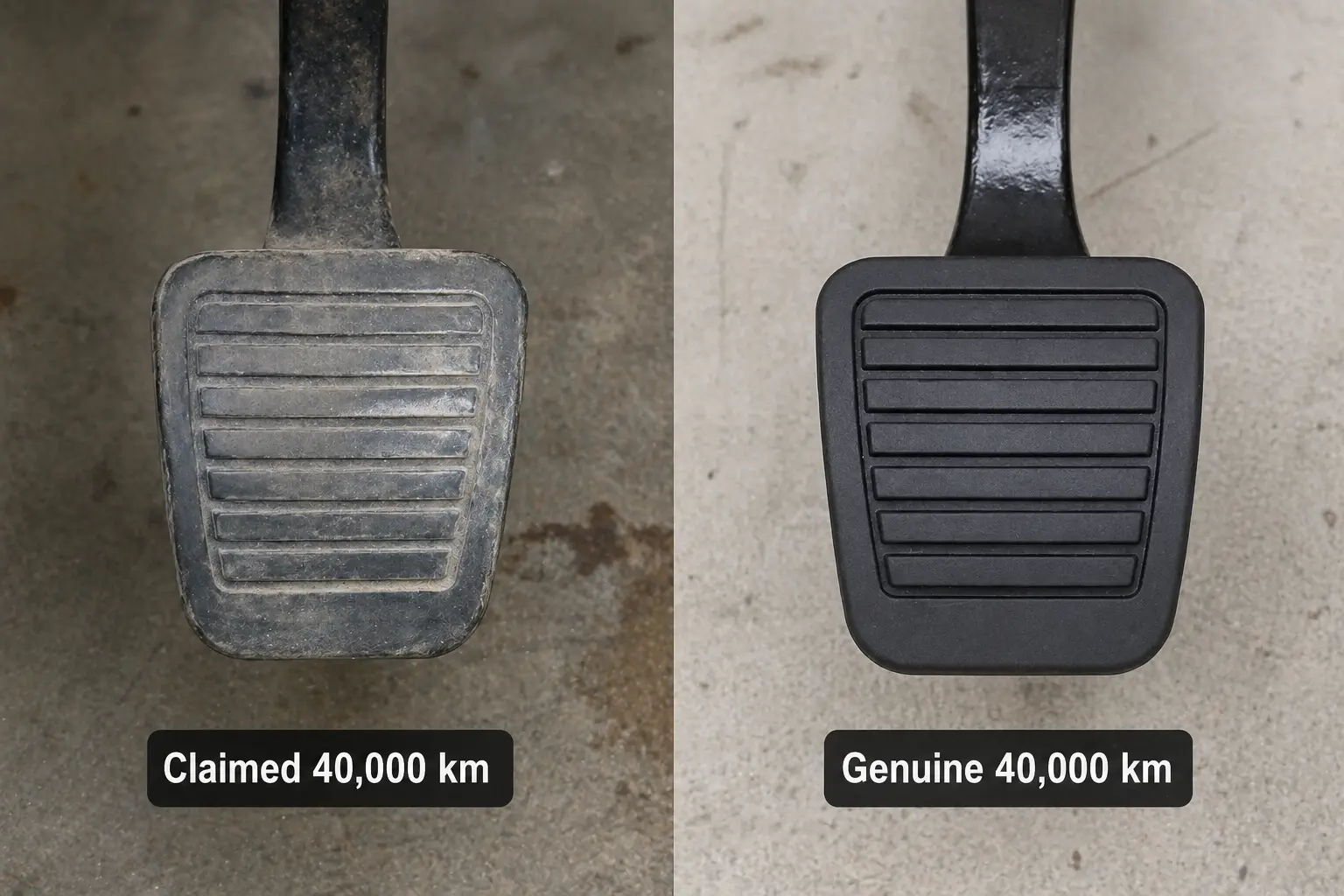
Left: claimed 40,000 km, genuine mileage ~85,000 km. Right: genuine 40,000 km pedal condition. Rubber texture and groove depth are the key tells - not surface colour.
Sign 2 - The "Service Gap" Paradox
Authorized service centres record mileage at every visit. Fraudsters often stop taking the car to the authorized centre once they decide to sell it, switching to local "FNGs" (Friendly Neighbourhood Garages) that don't upload data to the OEM cloud.
What to look for: A perfect service record for the first 3 years followed by a 2-year total silence. If the last recorded service was at 35,000 km two years ago, and the odometer now reads 42,000 km, the car has likely done 70,000+ km.
Sign 3 - VAHAN PUC History Mismatch
This is the "smoking gun" for 40% of tampered cars in India. Every time a car gets a PUC certificate, the technician is required to enter the current odometer reading. This data is synced to the central VAHAN database.
How to check:
- Use the OdoShield tool or the VAHAN portal
- Look for the "Mileage History" or "PUC details"
- Chronologically list the recorded kilometres
- The highest recorded mileage is the minimum true odometer reading
- If current odometer < highest VAHAN mileage → rollback confirmed
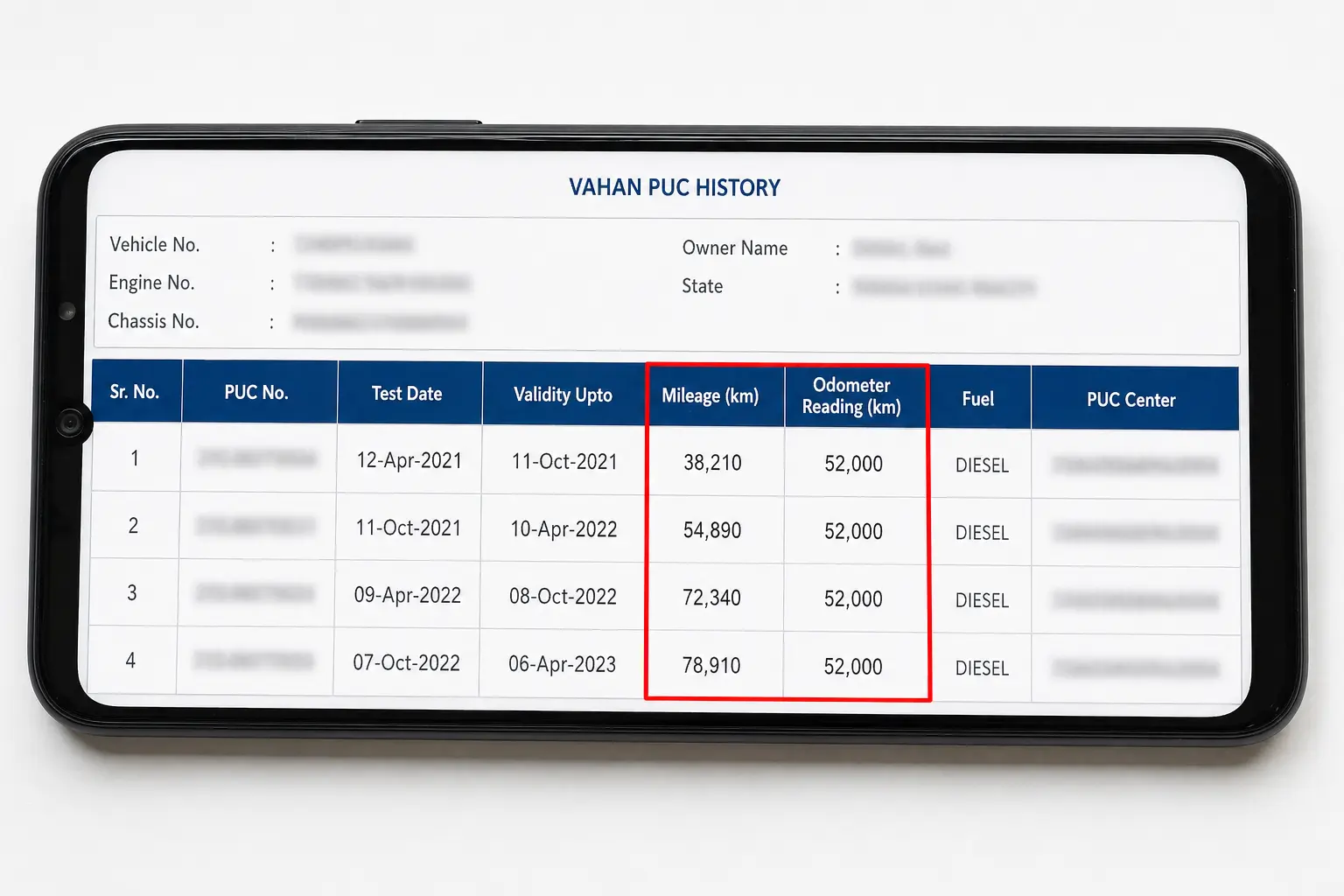
VAHAN PUC trail shows 78,910 km. The car's odometer reads 52,000 km. A 26,910 km discrepancy is unambiguous. This screenshot is admissible as evidence in a consumer court.
Sign 4 - Instrument Cluster Scratches and Misalignment
To roll back a digital odometer, the cluster sometimes needs to be physically removed to access the EEPROM chip. This leaves physical traces that a camera won't catch, but a keen eye will.
What to look for: Use the flashlight on your phone. Run it across the bezel edge at 45 degrees - scratches that are invisible in diffuse light become obvious under a raking beam. Press lightly on the cluster face - it should not flex or produce a rattle.
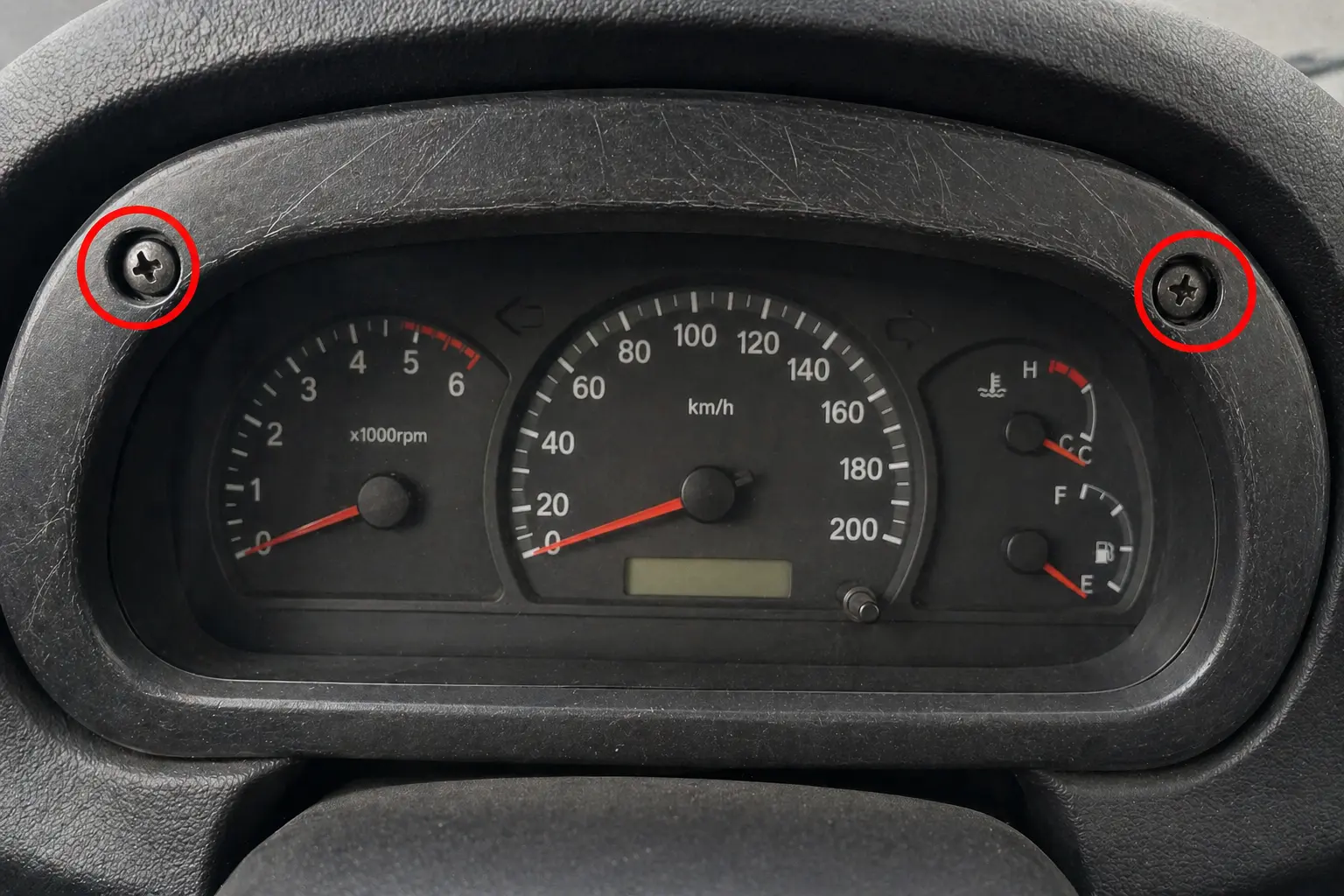
Fine scratches on bezel perimeter and misaligned screw heads - both visible on a car that claimed a single owner and "no accidents, no repairs." Cluster had clearly been removed.
Sign 5 - The ECU Memory Scan (OBD-II)
The dashboard display is just a "slave" to the engine's central computer (ECU). While it is easy to change the display, changing the mileage stored deep within the ECU and Transmission Control Module (TCM) is significantly harder and more expensive.
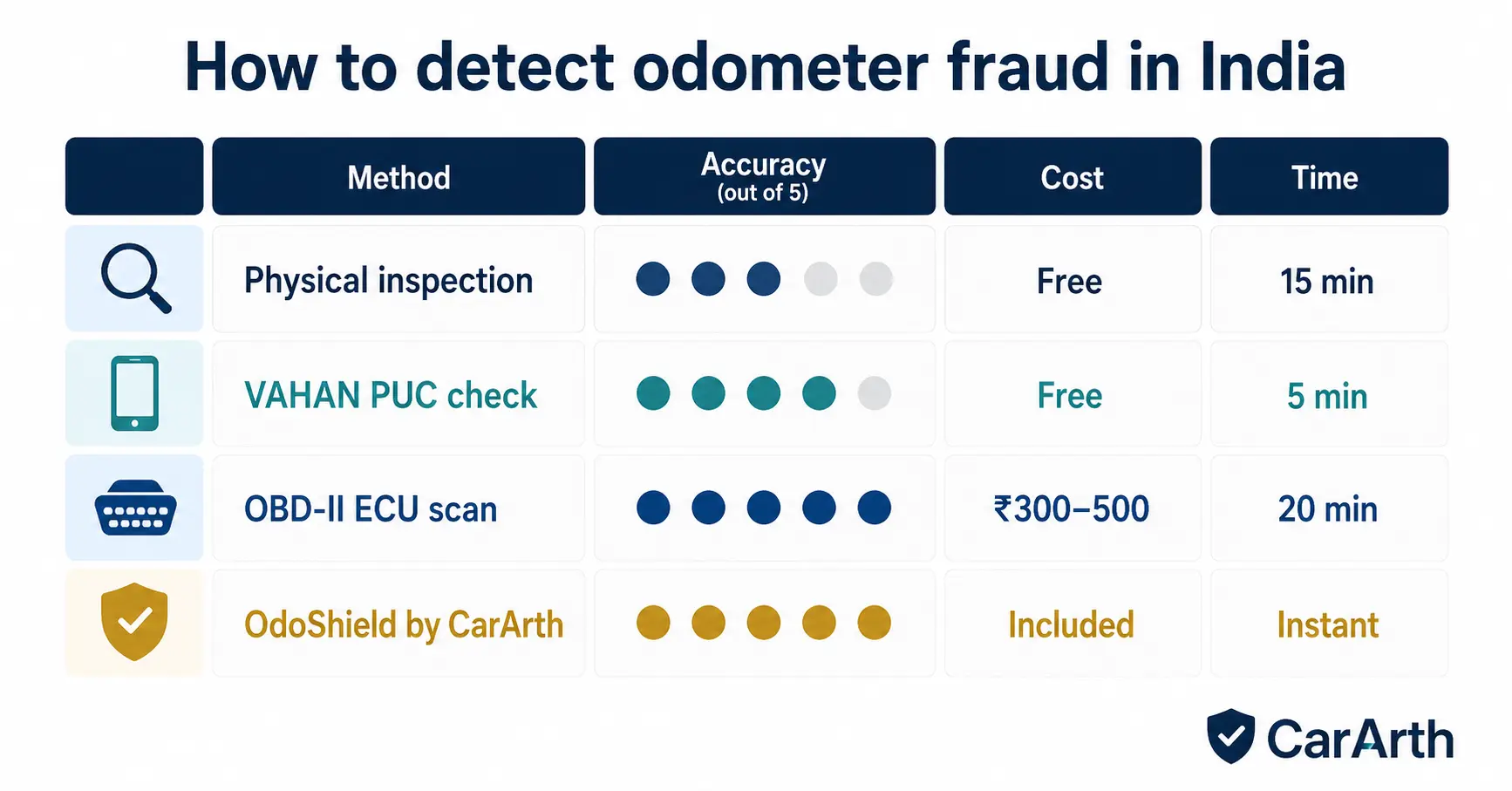
How to use this as a buyer: Before test-driving, ask to visit a nearby garage with an OBD-II scanner. Any mechanic with a modern diagnostic tool can run this in 10 minutes. If the seller refuses, treat the refusal itself as a sign - no seller with a genuine odometer reading has a reason to decline.
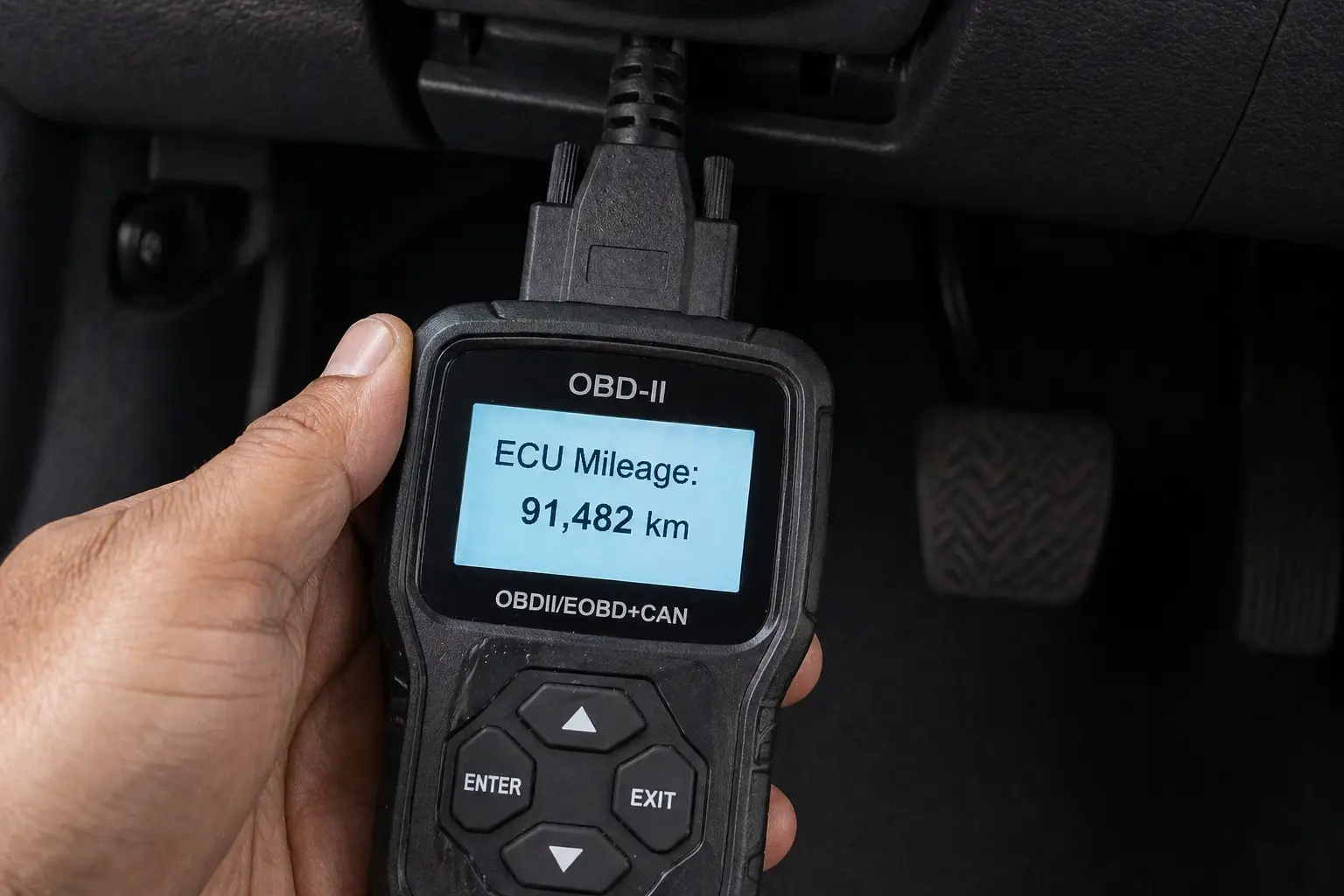
OBD-II reader shows ECU mileage: 91,482 km. Odometer display: 54,000 km. A 37,000 km discrepancy. OdoShield uses this ECU data as one of its 6 verification signals.
Sign 6 - Tyre DOT Code vs Tread Depth
Tyres are the most expensive consumable on a car. A car with 30,000 km should ideally be on its first set of tyres with about 30-40% tread remaining. If a car claims 25,000 km but has brand-new tyres, ask why. If it has 40,000 km and the tyres are bald, the mileage is likely higher.
What to look for: Find the DOT code on the inner sidewall of each tyre. Calculate age from manufacture date. Cross-reference tread depth with claimed mileage. Mismatches of more than 20,000 km warrant an ECU scan.
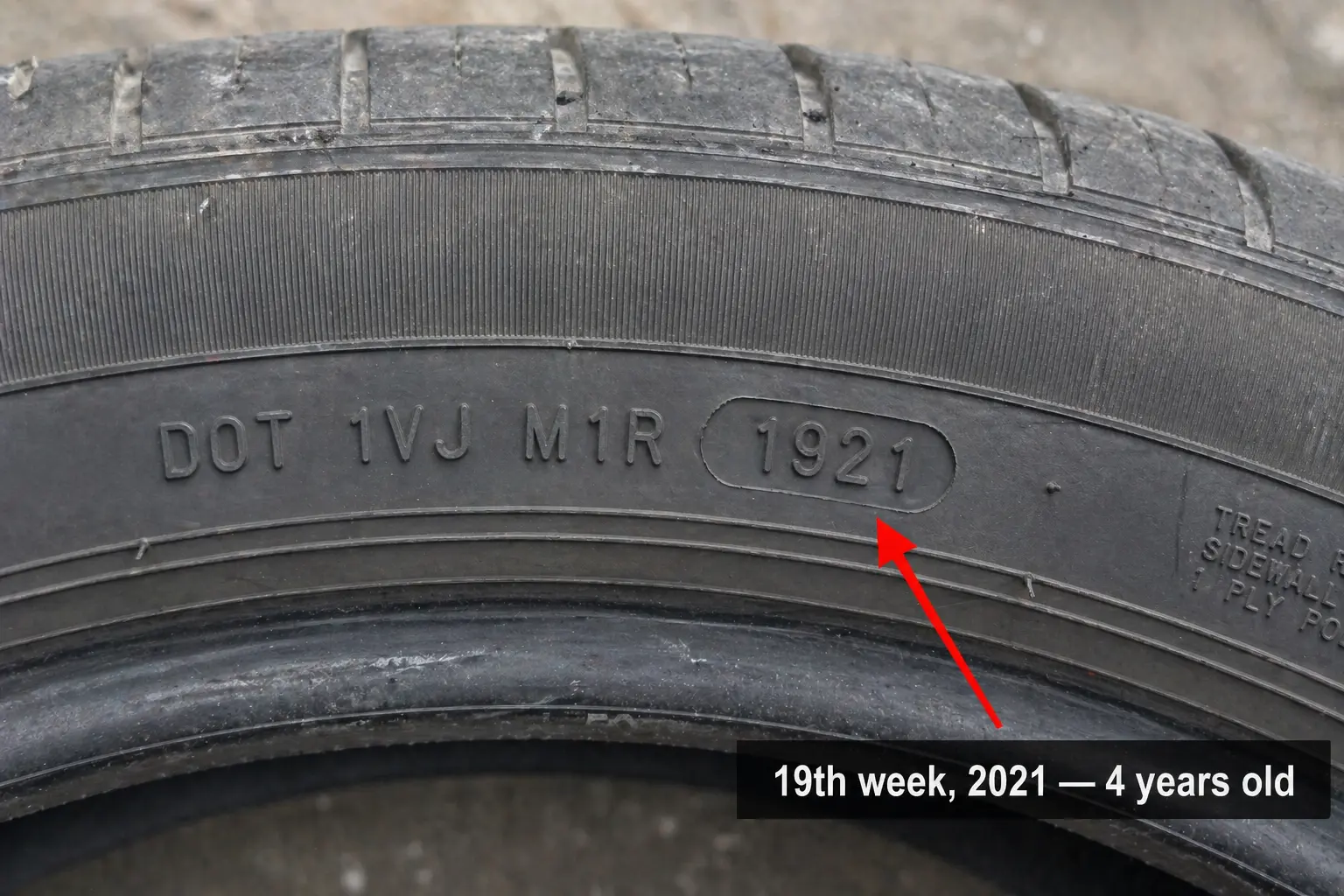
DOT code 1921: 19th week of 2021 - tyres are 5 years old. Tread depth is 2mm. Car claims 35,000 km. At normal driving cadence, 35,000 km in 5 years would leave 3.5-4mm of tread. This tyre tells a different story.
Sign 7 - The OdoShield Score
CarArth developed OdoShield to automate this entire process. It cross-references VAHAN history, insurance claim data (which records mileage at every accident survey), authorized service history, and proprietary AI pattern matching (comparing year, model, and city-average usage).
The "Paradox of Pristine" - Why Detailed Cars Are Suspect
Counterintuitive insight: The car that looks cleanest is the one most likely to be fraudulent.
A used car that has genuinely done 60,000 km in normal Indian urban use will show: minor stone chips on the front bumper, slight paint fade on the roof and bonnet, tiny scratches on door edges from parking, a worn centre armrest lid, and a boot sill with scuff marks. This is what honest mileage looks like.
A tampered car presented for sale has often been through a full detailing session immediately before listing - to remove the wear evidence that would have triggered the checks above. The paradox: a car that looks suspiciously pristine for its claimed age is more likely to be fraudulent than one that shows appropriate wear. When a five-year-old car looks showroom-new, ask why.
The second thing most buyers miss is the role of the seller's resistance to checks. A legitimate seller with a genuine odometer has no incentive to refuse a VAHAN check, an OBD scan, or an OdoShield run - these checks take 30 minutes and cost the buyer under ₹500. Resistance to any of these checks is stronger evidence of fraud than any of the physical signs above.
Legal Recourse if You've Already Bought a Tampered Car
If you discover odometer fraud after purchase, two legal frameworks apply. Both require documentary evidence - an OBD-II scan report, a VAHAN mismatch printout, or a written assessment from an authorised workshop - so gather this before approaching any forum.
Framework Provision What it covers Criminal Section 420 IPC - Cheating File an FIR. Requires written documentary proof of mismatch. Applicable when the seller commissioned the tampering. Civil / Consumer Consumer Protection Act 2019 File at the District Consumer Disputes Redressal Commission. Compensation and refund orders available. No lawyer required for claims under ₹1 crore. Motor Vehicles Act Section 182A - Odometer Tampering Fine up to ₹10,000 and/or 6 months imprisonment for first offence. Complaint filed with the RTO or transport authority. Evidence required - OBD-II scan printout, VAHAN PUC history screenshot, written workshop assessment confirming mileage-related wear, original sale agreement with stated mileage.Related readings
Related Reading
- Explore all Throttle Talk guides and insights
- GST on Used Cars in Hyderabad: What Changed and What Buyers Must Know (2026)
- What Are the Most Common Types of Used Car Fraud in India and How Can You Avoid Them?
- How Does Odometer Tampering Affect Financial Institutions Financing Used Cars in India?
- Learn how CarArth OdoShield checks odometer fraud
- Browse used cars in Hyderabad on CarArth